 by
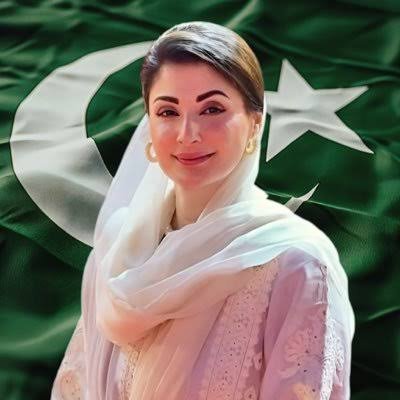
by MARYAM NAWAZ
From the Daughter of Nawaz Sharif to Pakistan’s First Female Chief Minister
Maryam Nawaz Sharif is one of the most prominent women in contemporary Pakistani politics. Born into the influential Sharif family, she entered public life carrying the legacy of one of Pakistan’s most powerful political families, but over time developed her own political identity through campaigning, party organization, public rallies, opposition politics, legal battles and electoral politics.
Today, she serves as the Chief Minister of Punjab, a position she has held since 26 February 2024. Her election marked a historic milestone: she became the first woman to serve as Chief Minister of any province in Pakistan.
Her journey from the daughter of three-time Prime Minister Nawaz Sharif to the head of Pakistan’s largest province is one of the most closely watched political stories in the country.
THE BEGINNING
FAMILY, CHILDHOOD & EARLY LIFE
Maryam Nawaz Sharif was born in Lahore on 28 October 1973 to Nawaz Sharif and Kulsoom Nawaz.
She grew up in the Sharif family, one of Pakistan’s most prominent political and business families.
Her grandfather, Muhammad Sharif, was a businessman and industrialist, while her father, Nawaz Sharif, went on to become one of Pakistan’s most important political leaders.
Her mother, Kulsoom Nawaz, also became an important figure in Pakistani politics, particularly during the period when the Sharif family was confronting military rule.
Maryam therefore grew up around politics, business, public life and the intense political environment surrounding her family.
She is the eldest daughter among Nawaz Sharif’s children and belongs to a family whose political influence has been particularly strong in Punjab.
BEFORE ACTIVE POLITICS
A LIFE OUTSIDE THE POLITICAL FRONTLINE
For much of her early adult life, Maryam Nawaz remained away from the front line of electoral politics.
She married Muhammad Safdar Awan in 1992.
Before becoming a major political figure herself, she was involved in charitable and family welfare activities associated with the Sharif family’s institutions.
Her public profile changed significantly when her father returned to national power in 2013.
That was the point at which Maryam began moving from being a prominent political family’s daughter to becoming a political operator in her own right.
2012–2013
THE FIRST MAJOR POLITICAL ROLE
Maryam Nawaz became increasingly active in the preparation for the 2013 general election.
She played a significant role in organizing and managing the Pakistan Muslim League-Nawaz campaign.
This was an important turning point.
Nawaz Sharif was attempting to return to the Prime Minister’s Office for a third time, while Pakistan Tehreek-e-Insaf and Imran Khan were rapidly expanding their political influence.
Maryam emerged as one of PML-N’s prominent campaign figures, particularly in efforts to connect the party with younger voters.
The 2013 election resulted in a major victory for PML-N, and Nawaz Sharif became Prime Minister for the third time.
Maryam’s political profile grew rapidly after the election.
2013–2014
PRIME MINISTER’S YOUTH PROGRAMME
In November 2013, Maryam Nawaz was appointed Chairperson of the Prime Minister’s Youth Programme.
The programme was designed to provide opportunities for young Pakistanis through initiatives including loans, education and skills-related programmes.
However, her appointment generated political controversy.
Opponents questioned whether the position had been awarded because of her family connection to the Prime Minister.
Her appointment was challenged in court, and she resigned from the position in 2014.
Although the episode was short-lived, it marked one of the first major public controversies surrounding her emerging political career.
2017
THE PANAMA PAPERS ERA
The political direction of Maryam Nawaz’s life changed dramatically after the Panama Papers controversy.
The leak generated questions about offshore companies and properties associated with the Sharif family.
The matter eventually reached Pakistan’s Supreme Court.
In July 2017, Nawaz Sharif was removed from the office of Prime Minister following the Supreme Court’s decision.
For Maryam, this became a defining moment.
She moved from being an emerging political figure inside a ruling family to becoming one of the most visible defenders of her father’s political position.
THE POLITICAL HEIR
A NEW ROLE WITHIN PML-N
Following Nawaz Sharif’s removal from office, Maryam became increasingly active in PML-N’s political campaigns.
She began appearing at large public rallies and addressing supporters directly.
Her political style became increasingly confrontational.
She criticized the government’s political opponents and defended her father’s political legacy.
Over time, she developed a reputation for powerful public speeches, direct political messaging and a strong presence at party rallies.
Dawn described her as the apparent political heir of Nawaz Sharif and noted that she became increasingly prominent after her father’s disqualification.
2018
THE ELECTION SHE COULD NOT CONTEST
Maryam Nawaz had planned to contest the 2018 general election.
However, her political ambitions were interrupted by the Avenfield reference.
In 2018, an accountability court convicted Maryam Nawaz in connection with the case concerning London properties associated with the Sharif family and sentenced her to seven years in prison.
She was also disqualified from contesting elections at that stage.
Maryam and her political supporters rejected the allegations and maintained that the proceedings were politically motivated.
She was later released on bail.
The legal case became one of the most important chapters in her political story.
2019
POLITICAL RESTRICTIONS AND A STRONGER OPPOSITION ROLE
In 2019, Maryam Nawaz was formally elevated within PML-N as Vice President of the party.
Her role became increasingly important as PML-N operated in opposition to the government of Imran Khan.
She became a major speaker at opposition rallies and participated prominently in the political movement against the PTI government.
Her speeches increasingly focused on:
Democracy
Political accountability
Civilian supremacy
Opposition to the PTI government
The political rights of Nawaz Sharif
PML-N’s return to power
2020–2021
THE PDM MOVEMENT
Maryam Nawaz became one of the most recognizable faces of the Pakistan Democratic Movement (PDM), an opposition alliance formed by several political parties.
She participated in major opposition rallies across Pakistan.
Her public profile expanded beyond the traditional PML-N voter base.
She became particularly influential among PML-N’s political workers and supporters in Punjab.
Her political rivalry with Imran Khan also became increasingly intense.
At this stage, Maryam was no longer simply being introduced as Nawaz Sharif’s daughter.
She had become a major political voice herself.
2022
A NEW POLITICAL LANDSCAPE
The political environment changed dramatically in April 2022, when Imran Khan’s government was removed through a parliamentary no-confidence vote.
PML-N became part of the coalition government formed afterward.
Maryam Nawaz remained one of the party’s most prominent campaigners.
Her political visibility increased as PML-N prepared for the possibility of another national election.
2022
THE LEGAL TURNING POINT
One of the most important developments in Maryam Nawaz’s legal journey came in September 2022.
The Islamabad High Court acquitted her in the Avenfield reference, overturning the conviction that had prevented her from contesting elections.
This changed the political possibilities available to her.
After years of legal restrictions, Maryam was once again able to participate directly in electoral politics.
2023
BECOMING ONE OF PML-N’S TOP LEADERS
In January 2023, Maryam Nawaz was appointed Senior Vice President and Chief Organiser of PML-N.
The appointment gave her a major organizational role inside the party.
She travelled extensively, met party workers and prepared the party’s organizational structure for the next general election.
Her position increasingly reflected her status as one of the central leaders of the PML-N.
2024
THE ELECTION THAT CHANGED HER CAREER
The 8 February 2024 general election became another major turning point.
Maryam Nawaz contested both a National Assembly seat and a Punjab Assembly seat.
She won both contests.
However, she gave up her National Assembly seat after PML-N nominated her for the position of Chief Minister of Punjab.
26 FEBRUARY 2024
A HISTORIC MOMENT
On 26 February 2024, Maryam Nawaz was elected Chief Minister of Punjab.
She became the first woman in Pakistan’s history to hold the office of Chief Minister of a province.
Her election transformed her from a senior party politician into the head of Pakistan’s most populous province.
Punjab is politically and economically crucial to Pakistan.
It has a population larger than many countries and plays a central role in the country’s agriculture, industry, education, healthcare and political system.
Maryam Nawaz therefore assumed one of the most powerful provincial offices in Pakistan.
THE MARYAM NAWAZ GOVERNMENT
GOVERNANCE & DEVELOPMENT
Since becoming Chief Minister, Maryam Nawaz’s government has emphasized a broad development agenda.
Her administration has focused on initiatives involving:
Healthcare
Education
Youth programmes
Housing
Agriculture
Women
Transport
Digital governance
Public infrastructure
Social welfare
Environmental initiatives
The Punjab government’s official priorities describe the administration’s mission around building a healthy, sustainable, safe and prosperous Punjab, with particular emphasis on education, youth empowerment and social mobility.
WOMEN IN POLITICS
Maryam Nawaz’s rise carries particular significance because Pakistan’s provincial chief ministerial offices had historically been occupied by men.
Her election in 2024 created a major symbolic milestone for women’s representation in Pakistani politics.
Her supporters describe her rise as evidence that women can occupy the highest levels of political leadership.
Critics, however, point out that her political rise is also deeply connected to the influence and resources of the Sharif political family.
Both realities are important when assessing her political career.
THE SHARIF POLITICAL LEGACY
DAUGHTER OF NAWAZ SHARIF
Maryam Nawaz’s political identity cannot be separated from her family background.
Her father, Nawaz Sharif, has served as Prime Minister of Pakistan three times.
Her uncle, Shehbaz Sharif, has also served as Prime Minister of Pakistan.
Her mother, Kulsoom Nawaz, became an important political figure during the period of military rule.
The Sharif family’s political influence has been particularly strong in Punjab.
Maryam inherited this political network but also developed her own public identity through years of campaigning and opposition politics.
POLITICAL STYLE
Maryam Nawaz is known for a political style built around:
DIRECT COMMUNICATION
She frequently addresses large public gatherings and communicates directly with party supporters.
STRONG PARTY LOYALTY
Her political career has remained closely tied to PML-N and the Sharif family’s political project.
CONFRONTATIONAL RHETORIC
She has frequently attacked political opponents, particularly PTI and Imran Khan.
DEVELOPMENT-FOCUSED POLITICS
As Chief Minister, her public image has increasingly included government projects and welfare initiatives alongside traditional party politics.
CONTROVERSIES
POLITICS, FAMILY & ACCOUNTABILITY
Maryam Nawaz’s political career has never been free from controversy.
Her opponents have questioned:
Her appointment to the Prime Minister’s Youth Programme
Her family’s overseas assets
The Avenfield property case
Her political rise within PML-N
The influence of the Sharif family
Her confrontational political rhetoric
At the same time, several legal proceedings against her have ended in acquittal or relief.
A professional biography therefore should distinguish between allegations, convictions and final court outcomes rather than presenting every accusation as an established fact.
THE AVERYFIELD CHAPTER
The London Avenfield properties became one of the most important legal issues surrounding Maryam Nawaz and her family.
In 2018, an accountability court convicted her in the Avenfield reference.
However, in September 2022, the Islamabad High Court acquitted Maryam Nawaz in that case.
The acquittal was a major legal and political turning point because it removed the conviction that had prevented her from contesting elections.
This distinction matters: the properties were at the centre of legal proceedings, but the eventual court outcome for Maryam Nawaz was acquittal.
HER POLITICAL EVOLUTION
Maryam Nawaz’s political career can be divided into several distinct stages:
1973–2012
Family life and public activities outside frontline electoral politics.
2012–2014
Entry into active political campaigning and the Prime Minister’s Youth Programme.
2017–2018
Rise as a major PML-N political voice following Nawaz Sharif’s disqualification.
2019–2021
Leadership role in PML-N and opposition politics against the PTI government.
2022
Legal acquittal in the Avenfield reference and restoration of electoral eligibility.
2023
Appointment as Senior Vice President and Chief Organiser of PML-N.
2024
Electoral victory and historic election as Punjab’s first female Chief Minister.
2024–2026
Governance of Punjab and consolidation of her position as one of Pakistan’s most prominent political leaders.
MARYAM NAWAZ TODAY
As of 2026, Maryam Nawaz remains the Chief Minister of Punjab.
Her administration continues to oversee the province’s largest government machinery, while her position within PML-N keeps her at the centre of Pakistan’s national political conversation.
Her political future remains closely watched because she represents a new generation of the Sharif political family.
The question is no longer simply whether Maryam Nawaz is the daughter of a former Prime Minister.
She has now established herself as a political leader with her own electoral mandate, party organization and executive office.
THE LEGACY IN THE MAKING
Maryam Nawaz’s story is still being written.
She began life as the daughter of one of Pakistan’s most powerful political families.
She entered politics through campaigning.
She became a party organizer.
She faced court cases and political restrictions.
She became one of the strongest voices of PML-N’s opposition campaign.
She survived a period of political and legal uncertainty.
She returned to electoral politics.
And in February 2024, she achieved a historic milestone by becoming Pakistan’s first female provincial Chief Minister.
Her supporters see her as a symbol of political resilience, modern leadership and women’s advancement in Pakistani politics.
Her critics see her rise as inseparable from the power of the Sharif political dynasty.
The historical assessment of her leadership will ultimately depend on the long-term record of her government and the political choices she makes in the years ahead.
THE JOURNEY CONTINUES
From the daughter of Nawaz Sharif to a campaign strategist.
From a political family member to a party leader.
From opposition rallies to the Punjab Assembly.
From legal battles to electoral victory.
From political heir to Chief Minister.
Maryam Nawaz’s journey represents one of the most remarkable political transformations of a woman in Pakistan’s contemporary political history.
Her story is not finished.
The next chapter is being written from the Chief Minister’s Office of Punjab.
