 by
by Mohenjo-daro and Harappa:
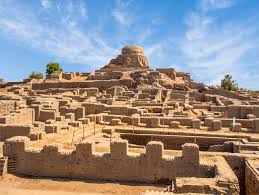
The Pillars of the Indus Valley Civilization Mohenjo-daro and Harappa stand as remarkable symbols of early human urban development. Flourishing around 2600–1900 BCE, these cities were the heart of the Indus Valley Civilization (IVC), one of the world’s earliest and most advanced civilizations, alongside Mesopotamia and Ancient Egypt. Located in present-day Pakistan, Mohenjo-daro and Harappa reveal an extraordinary level of planning, engineering, social organization, and cultural sophistication that continues to intrigue historians and archaeologists.
Discovery and Historical Background
Harappa was the first site of the Indus Valley Civilization to be discovered in 1921 by Daya Ram Sahni, while Mohenjo-daro was excavated a year later in 1922 by R. D. Banerji. These discoveries transformed our understanding of ancient South Asian history, proving that a highly developed civilization existed in the region long before the arrival of the Aryans.
The civilization thrived along the fertile plains of the Indus River and its tributaries. Favorable geography supported agriculture, trade, and large urban populations. At its peak, the Indus Valley Civilization covered over 1.25 million square kilometers, making it one of the largest ancient civilizations in the world.
Urban Planning and Architecture
One of the most remarkable characteristics of Mohenjo-daro and Harappa is their extraordinary sense of urban planning, which reflects a highly advanced and disciplined society. The cities were carefully designed in a precise grid pattern, where wide main streets and narrow lanes intersected at perfect right angles, creating an organized and efficient layout. This thoughtful planning ensured smooth movement, proper ventilation, and effective management of space. Such architectural foresight was far ahead of its time and remained unmatched by many later civilizations. The harmonious arrangement of streets and structures reveals the Indus Valley people’s deep understanding of civic order, engineering, and community living.
City Layout
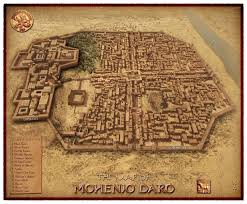
Both cities were thoughtfully divided into two distinct sections, each serving a specific purpose and reflecting the highly organized nature of the Indus Valley Civilization. The Citadel, built on an elevated platform, formed the heart of the city. This raised area was likely reserved for important administrative, religious, and public activities, offering protection from floods while symbolizing authority and civic importance. Within the Citadel stood large structures such as granaries, assembly halls, and ritual spaces, emphasizing its role in governance and collective life.
Below the Citadel lay the Lower Town, where the majority of the population resided. This area was carefully planned with well-laid streets and densely built neighborhoods, yet it maintained order and accessibility. Residential buildings were constructed using standardized baked bricks, a clear sign of centralized planning and uniform construction practices across the civilization. Many houses featured multiple rooms, spacious inner courtyards, and even private wells, ensuring comfort, ventilation, and access to clean water. Such architectural sophistication reflects a remarkably high standard of living and demonstrates the civilization’s deep concern for functionality, hygiene, and everyday well-being.
Advanced Drainage and Sanitation System
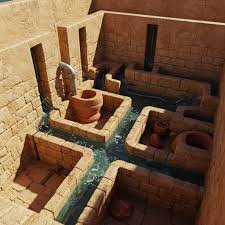
The drainage systems of Mohenjo-daro and Harappa are among their most impressive achievements. Almost every house had a bathroom connected to a covered drainage system running beneath the streets. These drains were carefully designed with slopes and inspection holes for cleaning, demonstrating an advanced understanding of sanitation and public health.
Such sophisticated water management systems were unparalleled in the ancient world and highlight the civilization’s emphasis on cleanliness and civic planning.
The Great Bath and Public Structures
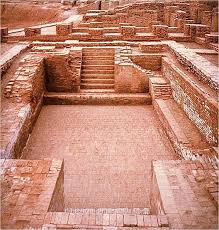
Mohenjo-daro is particularly famous for the Great Bath, a large rectangular tank built with finely fitted bricks and waterproofed with bitumen. It is believed to have been used for ritual bathing, possibly connected to religious or ceremonial practices.
Other notable public structures include:
- Granaries (especially prominent in Harappa), suggesting centralized storage and distribution of food.
- Assembly halls, which may have been used for administrative or social gatherings.
Economy and Trade
The economy of the Indus Valley Civilization was primarily based on agriculture, supported by crops such as wheat, barley, peas, cotton, and dates. The presence of granaries indicates surplus production and organized storage.
Trade played a crucial role in economic life. Archaeological evidence shows trade links with:
- Mesopotamia
- Persian Gulf regions
- Central Asia
Goods traded included beads, pottery, seals, textiles, metals, and semi-precious stones like lapis lazuli. The discovery of standardized weights and measures suggests a regulated and efficient trade system.
Seals, Script, and Art
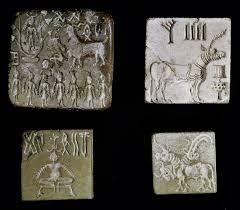
Thousands of seals have been found at both Mohenjo-daro and Harappa. Made primarily of steatite, these seals often depict animals such as bulls, elephants, unicorn-like creatures, and human figures. They likely served commercial or administrative purposes.
The Indus script, engraved on seals and pottery, remains undeciphered. Its mysterious nature continues to be one of the greatest puzzles in archaeology.
Artistic achievements include:
- The famous “Dancing Girl” bronze statue from Mohenjo-daro
- Stone sculptures such as the “Priest-King”
- Fine pottery with geometric and floral designs
These artifacts reflect both aesthetic skill and cultural richness.
Social and Political Organization
Unlike other ancient civilizations, there is no clear evidence of kings, palaces, or large temples in Mohenjo-daro and Harappa. This has led scholars to suggest that the society may have been:
- Relatively egalitarian
- Governed by a council or group of elites
- Focused on civic order rather than monumental glorification of rulers
Uniformity in brick sizes, city layouts, and artifacts across vast areas indicates strong administrative control and shared cultural norms.
Religion and Beliefs
Although no large temples have been discovered, religious life likely played an important role. Evidence suggests:
- Worship of nature and fertility symbols
- Reverence for animals
- Possible proto-forms of later Hindu practices
The “Pashupati Seal,” depicting a seated figure surrounded by animals, is often associated with an early form of Lord Shiva, though this interpretation remains debated.
Decline of Mohenjo-daro and Harappa
Around 1900 BCE, The Pillars of the Indus Valley Civilization Mohenjo-daro and Harappa began to decline. Several theories have been proposed:
- Climate change and weakening monsoon patterns
- Repeated flooding of the Indus River
- Decline in trade networks
- Tectonic activity affecting river courses
There is little evidence of violent invasion. The decline appears to have been gradual, leading to the dispersal of populations into smaller rural communities.
Legacy and Significance
Mohenjo-daro and Harappa represent a golden chapter of ancient human history. Their achievements in urban planning, sanitation, trade, and social organization were far ahead of their time. They laid foundational cultural elements that influenced later South Asian civilizations.
Today, these sites are invaluable for understanding early urban life and remain a source of national and global heritage.
Summary Table: Mohenjo-daro and Harappa
| Feature | Mohenjo-daro | Harappa |
|---|---|---|
| Location | Sindh, Pakistan | Punjab, Pakistan |
| Discovery | 1922 (R. D. Banerji) | 1921 (Daya Ram Sahni) |
| Meaning of Name | “Mound of the Dead” | Named after modern village |
| Major Structure | Great Bath | Granaries |
| City Planning | Grid pattern | Grid pattern |
| Drainage System | Highly advanced | Highly advanced |
| Brick Type | Baked bricks | Baked bricks |
| Economic Activity | Trade, agriculture | Trade, agriculture |
| Cultural Artifacts | Dancing Girl, seals | Seals, pottery |
| Importance | Religious & civic center | Industrial & storage center |
Tags
#Indus Valley Civilization #Mohenjo-daro #Harappa #Ancient India #Ancient Pakistan #Bronze Age Civilization #Urban Planning, #Great Bath #Harappan Culture #Archaeology #World History #Early Civilizations #Indus Script