 by
by Nawaz Sharif — A Life Defined by Power, Politics, Triumphs & Turbulence
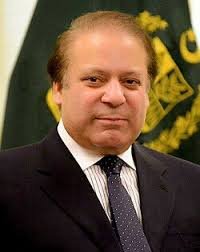
Muhammad Nawaz Sharif is one of the most influential and consequential political figures in Pakistan’s modern history. His political journey stretches across decades of Pakistan’s changing political landscape, taking him from a businessman and provincial politician to the country’s Prime Minister three times, followed by periods of removal from office, exile, legal battles, political comeback and renewed influence.
Born on 25 December 1949 in Lahore, Nawaz Sharif emerged from a prominent industrial family and entered politics during a period of major political change in Pakistan. His early political career developed in Punjab, where he eventually became Chief Minister of Punjab. His rise through provincial politics established the foundation for a national political career that would eventually make him one of Pakistan’s longest-serving political leaders.
THE RISE OF A POLITICAL POWERHOUSE
Nawaz Sharif’s national political journey accelerated during the 1980s.
He became closely associated with the political alliance that eventually evolved into the Pakistan Muslim League-Nawaz (PML-N). His political style was strongly connected with economic development, infrastructure, industrial growth and private-sector investment.
In 1985, he became Chief Minister of Punjab.
His time in Punjab helped establish his political identity and gave him a powerful organizational base. Roads, infrastructure projects, industrial development and economic initiatives became important elements of the political image he developed during this period.
The political environment of Pakistan, however, was highly unstable. Governments changed, alliances shifted and relations between political leaders and the country’s powerful institutions repeatedly influenced the direction of national politics.
Nawaz Sharif emerged from this environment as one of the country’s most powerful civilian politicians.
1990 — THE FIRST PRIME MINISTERSHIP
In the 1990 general election, the alliance led by Nawaz Sharif emerged as a major political force.
He became Prime Minister of Pakistan in November 1990.
His first government emphasized economic liberalization, privatization, infrastructure development and industrial investment.
One of the most visible elements of his political vision was the expansion of Pakistan’s road and transport infrastructure.
But his first government did not complete its constitutional term.
In 1993, President Ghulam Ishaq Khan dismissed Nawaz Sharif’s government. Nawaz Sharif challenged the decision and temporarily returned to office after the Supreme Court ruled in his favour.
The political crisis, however, continued.
Eventually, both the President and Prime Minister resigned.
Nawaz Sharif’s first term therefore ended after a dramatic confrontation between Pakistan’s civilian institutions.
THE RETURN TO POWER
Nawaz Sharif returned to national power in the 1997 general election.
This time, PML-N won a large parliamentary majority.
He became Prime Minister for the second time.
With a stronger parliamentary position, his government pursued a broad development agenda.
One of the most prominent projects associated with this period was the construction of the Lahore–Islamabad Motorway, reflecting his emphasis on large-scale infrastructure and connectivity.
His government also pursued economic reforms and nuclear policy initiatives.
1998 — PAKISTAN BECOMES A NUCLEAR POWER
One of the most defining moments of Nawaz Sharif’s second premiership came in May 1998.
After India conducted a series of nuclear tests, Pakistan faced enormous domestic and international pressure over whether it should respond.
Pakistan ultimately conducted its own nuclear tests at Chagai.
The tests transformed Pakistan into an openly declared nuclear-armed state.
For Nawaz Sharif, the decision became one of the most important and controversial moments of his political career.
Supporters viewed the decision as a historic act of national security and sovereignty.
Critics focused on the economic and diplomatic consequences that followed.
Whatever the political interpretation, the 1998 nuclear tests remain permanently connected with Nawaz Sharif’s second term as Prime Minister.
THE 1999 MILITARY COUP
Nawaz Sharif’s second government ended dramatically.
On 12 October 1999, General Pervez Musharraf took power in a military coup after a growing confrontation between the civilian government and military leadership.
Nawaz Sharif was removed from office and later faced criminal proceedings.
He was eventually sentenced and spent time in prison before reaching an agreement that resulted in his departure from Pakistan.
He went into exile in Saudi Arabia.
The man who had once controlled Pakistan’s government was suddenly outside the country and largely outside its political system.
YEARS IN EXILE
The exile years became an important chapter in Nawaz Sharif’s political story.
Although he was physically outside Pakistan, PML-N continued to exist as a major political organization.
Nawaz Sharif maintained political influence from abroad and remained an important opposition figure.
His relationship with the Pakistani political establishment remained complicated, while his return to Pakistan became a central issue for his supporters.
Eventually, after years abroad, Nawaz Sharif returned to Pakistan.
2007 — THE POLITICAL COMEBACK BEGINS
In November 2007, Nawaz Sharif returned to Pakistan.
His return marked the beginning of another major phase of his political career.
PML-N participated in the 2008 general election, becoming one of Pakistan’s two dominant political parties.
Although Nawaz Sharif did not become Prime Minister immediately, PML-N’s parliamentary strength restored him as one of the country’s central political figures.
2013 — THE THIRD RETURN TO THE PRIME MINISTER’S OFFICE
The biggest political comeback came in 2013.
PML-N emerged as the largest party in the National Assembly, and Nawaz Sharif became Prime Minister for the third time.
This made him the first Pakistani politician to serve as Prime Minister on three separate occasions.
His third government focused heavily on economic development, energy, infrastructure and transportation.
Major projects associated with this period included:
China–Pakistan Economic Corridor (CPEC)
Motorway expansion
Energy projects
Transport infrastructure
Economic and industrial development
The government also promoted closer economic cooperation with China.
CPEC AND THE DEVELOPMENT AGENDA
During Nawaz Sharif’s third government, the China–Pakistan Economic Corridor became one of the country’s most important economic and strategic initiatives.
CPEC formed part of China’s broader Belt and Road Initiative and included investment in energy, transport, infrastructure and the Gwadar region.
Supporters argued that the projects could address Pakistan’s energy shortages and strengthen long-term economic connectivity.
Critics questioned project costs, debt sustainability, transparency and the distribution of economic benefits.
CPEC nevertheless became one of the defining economic projects of the Nawaz Sharif era.
THE PANAMA PAPERS CRISIS
Nawaz Sharif’s third government was eventually overwhelmed by a major controversy involving his family’s overseas assets.
In 2016, the Panama Papers leak brought international attention to offshore companies and assets connected to numerous individuals around the world.
The documents became politically explosive in Pakistan because they raised questions about properties and companies associated with the Sharif family.
The controversy eventually reached Pakistan’s Supreme Court.
2017 — REMOVAL FROM OFFICE
On 28 July 2017, Pakistan’s Supreme Court disqualified Nawaz Sharif from holding public office.
He was removed from the office of Prime Minister.
The decision marked the end of his third premiership.
The Panama-related legal proceedings subsequently produced several accountability cases, including the Avenfield property reference and Al-Azizia reference.
The cases became among the most controversial legal chapters of Nawaz Sharif’s career.
THE LONDON PROPERTY CONTROVERSY
AVENFIELD APARTMENTS
Among the most internationally recognized assets associated with the Sharif family are the Avenfield apartments on Park Lane in London.
Pakistan’s Panama proceedings examined four apartments at Avenfield House and their ownership structures. The Supreme Court’s Panama judgment recorded that the properties were held through offshore companies associated with members of the Sharif family.
The properties became central to the corruption and asset-disclosure controversy surrounding the Sharif family.
It is important, however, to distinguish the existence and ownership history of the properties from allegations against Nawaz Sharif personally.
Nawaz Sharif was convicted by an accountability court in the Avenfield reference in 2018, but the Islamabad High Court later acquitted him in November 2023, setting aside that conviction.
Therefore, a professional biography should not simply state that the London properties were “Nawaz Sharif’s illegally acquired property” as an established present-day fact.
The accurate description is that the London properties became the subject of major Pakistani legal proceedings involving the Sharif family, and Nawaz Sharif’s Avenfield conviction was subsequently overturned by the Islamabad High Court.
HOW MANY PROPERTIES DOES NAWAZ SHARIF OWN?
Claims about Nawaz Sharif’s total wealth and the exact number of properties attributed to him have varied substantially over time.
The Panama proceedings documented several overseas assets and companies associated with members of the Sharif family, while political opponents have made much broader claims regarding the family’s wealth.
Because asset declarations, family ownership, corporate structures and court findings are not the same thing, it would be misleading to publish a single “Nawaz Sharif net worth” figure without specifying:
the year of the declaration,
which family member owns the asset,
whether the asset is personally owned or held through a company,
and whether the figure is an allegation, declaration or court-established fact.
For a professional website, this distinction is essential.
2018 — CONVICTION AND POLITICAL EXCLUSION
Following his removal from office, Nawaz Sharif faced accountability proceedings.
In the Avenfield reference, an accountability court sentenced him to prison in 2018.
The Islamabad High Court suspended the sentence later that year.
Nawaz Sharif subsequently left Pakistan for medical treatment and remained abroad for several years.
His legal status became another major point of political conflict between PML-N and its opponents.
2023 — THE RETURN TO PAKISTAN
After years outside Pakistan, Nawaz Sharif returned to the country in October 2023.
His return immediately transformed the political landscape.
The PML-N presented him as a leader returning to rebuild the country, while political opponents questioned the circumstances surrounding his legal and political comeback.
In November 2023, the Islamabad High Court acquitted him in the Avenfield reference.
This significantly changed the legal circumstances surrounding one of the most famous cases of his political career.
2024 — ANOTHER POLITICAL COMEBACK
Pakistan held general elections in February 2024.
PML-N emerged as one of the country’s major parliamentary forces.
Nawaz Sharif returned to the National Assembly and was elected leader of the PML-N parliamentary party, while his younger brother Shehbaz Sharif became Prime Minister.
Nawaz Sharif subsequently became President of the Pakistan Muslim League-Nawaz, reinforcing his position as the central political figure of the Sharif family and the PML-N.
NAWAZ SHARIF TODAY
Nawaz Sharif’s political story has moved through several extraordinary cycles:
Power → Removal → Exile → Return → Power → Disqualification → Legal Battles → Return
His political influence, however, has survived each of these transitions.
Today, he remains a central figure within PML-N and continues to influence the party’s political direction.
His family also remains deeply involved in Pakistani politics, with Shehbaz Sharif having served as Prime Minister and Maryam Nawaz Sharif serving as Chief Minister of Punjab.
THE LEGACY
Nawaz Sharif’s legacy is deeply contested.
To his supporters, he represents:
Economic development
Infrastructure and motorways
Industrial growth
Nuclear sovereignty
CPEC and China–Pakistan economic cooperation
A civilian political struggle for elected government
To his critics, his career is associated with:
Political confrontation
Relations with Pakistan’s military establishment
Governance controversies
Accountability proceedings
The Panama Papers controversy
Questions surrounding family wealth and overseas assets
A balanced account must acknowledge both sides.
THREE TIMES PRIME MINISTER
1990–1993
First term as Prime Minister
1997–1999
Second term as Prime Minister
2013–2017
Third term as Prime Minister
Across these three periods, Nawaz Sharif became one of the few Pakistani politicians to repeatedly return to the country’s highest elected executive office.
His career demonstrates how dramatically Pakistani politics can change — and how political influence can survive even after removal from power.
FROM BUSINESS TO POWER
Nawaz Sharif’s story is not simply a political biography.
It is the story of a businessman who entered politics, became Chief Minister of Punjab, rose to the Prime Minister’s Office, confronted presidents and military rulers, survived exile, returned to power, lost office through judicial proceedings, faced imprisonment and legal battles, and eventually returned to Pakistan’s political centre.
His journey has been shaped by power, ambition, development, controversy, courts, elections and political resilience.
More than four decades after his rise in Punjab politics, Nawaz Sharif remains one of the most recognizable names in Pakistan’s political history.
THE JOURNEY IS STILL BEING WRITTEN.
Nawaz Sharif’s political career is not simply a record of the offices he has held. It is a reflection of Pakistan’s own turbulent journey between civilian politics, institutions, courts, elections, economic ambitions and the continuing struggle for political power.